
Hard water 101
Where white crust comes from and how to test your own tap.
Guide · Sizing
Softener size is not about the physical tank or the number of bathrooms on a brochure. It comes down to how many grains of hardness your household pulls out of the water each day, and how many days you want between regenerations. With a tap test and a rough count of water use, you can do the math at the kitchen table and walk into any conversation knowing what a reasonable answer looks like.
Hardness, from your own tap. Green Bay’s dated 2025 utility report does not list a hardness value, and the utility’s FAQ figure is undated, so use a strip or drop-kit result from your kitchen. If you read it in mg/L, divide by 17.1 to get grains per gallon (gpg). If you have iron as well, many sizing methods add a few grains per gallon for each part per million of iron; ask about that specifically, because iron is better removed before the softener.
Daily water use. A common planning figure is 60 to 80 gallons per person per day indoors. Your water bill gives a better number: divide the gallons used in a winter billing period, when there is no lawn watering, by the number of days and people.
Days between regenerations. Most guidance aims for roughly a week. Regenerating far more often wastes salt and water; going much longer lets resin sit loaded with hardness.
The worksheet below uses invented values so the arithmetic is easy to follow. Swap in your own household size, water use and test result.

In the example, the household removes about 2,520 grains a day and wants roughly eight days between regenerations, so each cycle must handle about 20,160 grains. That is the figure to compare against each model’s listed capacity at a given salt setting.
Many manufacturers advertise a maximum capacity reached only with a heavy salt dose. The same resin delivers less capacity per pound of salt at that setting, so a slightly larger tank run at a moderate salt setting often uses less salt over a year than a small tank pushed hard.
Capacity is only half of sizing. The valve and tank must also pass enough water when several fixtures run at once without a big pressure drop. A house with three bathrooms, a large tub or a busy morning routine needs a unit built for that peak flow, which makers list in gallons per minute.
Plumbing size matters too. A softener with a small valve on a large main can become a bottleneck even if its grain capacity is generous.
A timer valve regenerates on a fixed schedule whether you used much water or not. A demand-initiated (metered) valve counts gallons and regenerates only when the resin is close to its limit. For homes where use changes, such as visitors over the holidays or an empty house during a vacation, metered valves usually waste less. The U.S. EPA’s WaterSense program and Wisconsin Salt Wise both encourage efficient settings for that reason.
Once a unit is running, test a softened tap after a week and again before the next regeneration. If hardness creeps through before the cycle ends, capacity or settings need adjusting. If the softener regenerates far more often than planned, check the hardness setting first. The installation guide covers placement, the drain and the bypass.
It depends entirely on your hardness and water use. Run the worksheet with your own numbers; the listed capacity at your chosen salt setting is what matters.
A little headroom is sensible if the household is growing, but large oversizing on a timer valve wastes salt. A metered valve reduces that penalty.
Sources: Penn State Extension, “Water Softening” (2025); Minnesota Department of Health, “Home Water Softening” (2022); U.S. EPA WaterSense; Wisconsin Salt Wise; Green Bay Water Utility 2025 Annual Drinking Water Report.
Where white crust comes from and how to test your own tap.
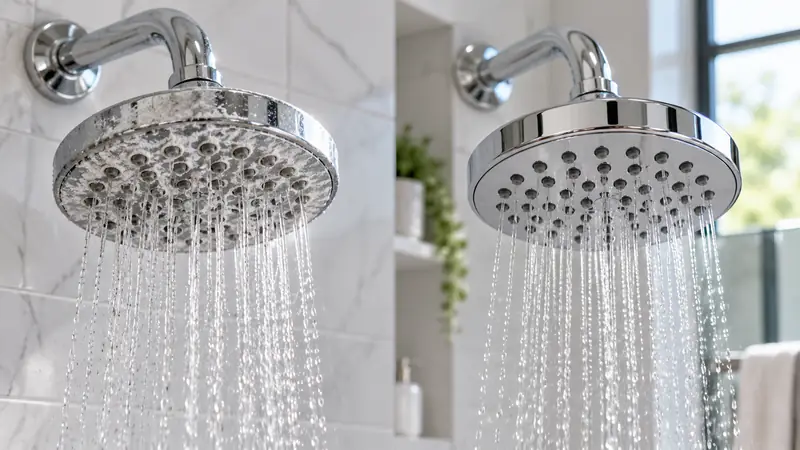
What changes at the sink, in the shower and in the laundry.
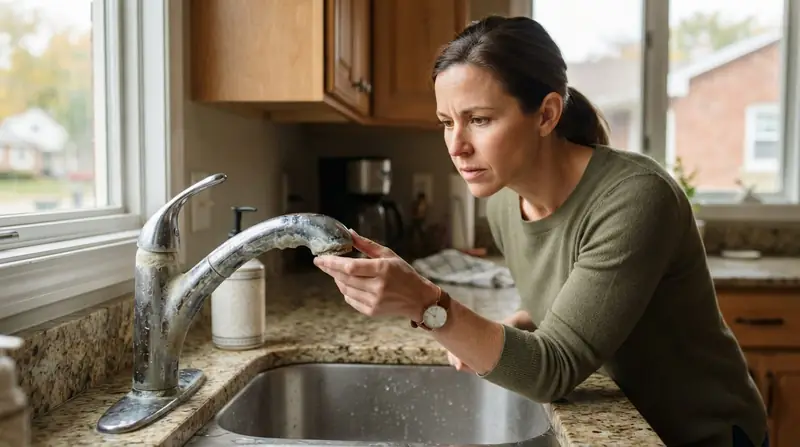
A step-by-step check before you call.
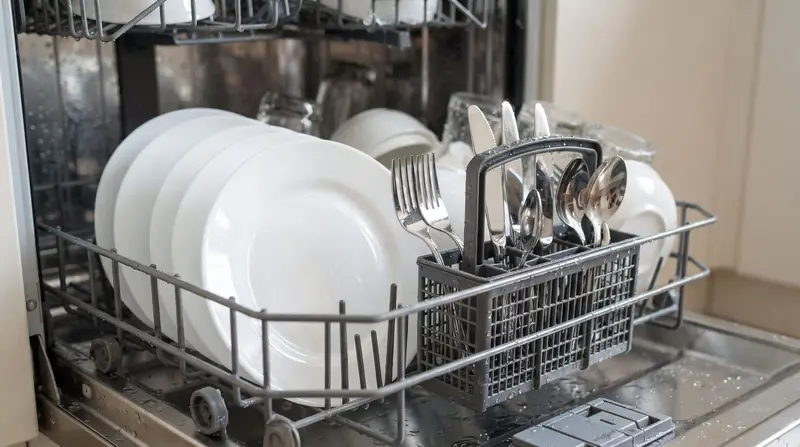
A decision guide for homes on the city supply.
Green Bay, Wisconsin
Our map shows 118 S Adams St, Green Bay, WI 54301. Please contact us before visiting if you have questions about getting here or want to discuss your water.
Contact us
Tell us what you are seeing and how to reach you. You can also call 920-678-7116 if you would rather talk by phone.