

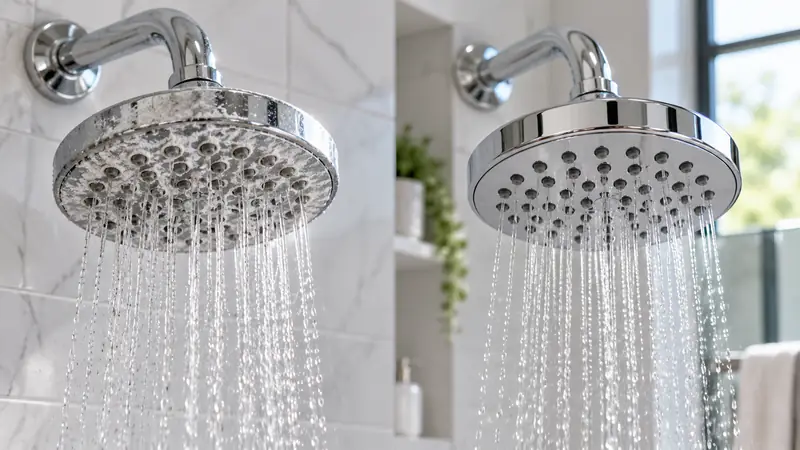
Soft vs hard water
What changes at the sink, in the shower and in the laundry.
Guide · Hard water basics
The chalky ring around a faucet base, the cloudy film on a drinking glass and the crust inside a kettle all come from the same two minerals. This guide explains where they come from, how hardness is measured, what it does to a house, and how to get a reliable number for your own tap without guessing or trusting a figure that has no date.
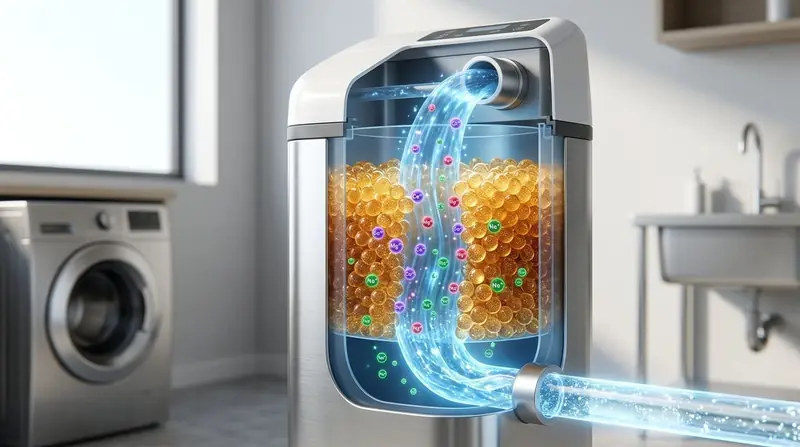
Hardness is mostly dissolved calcium and magnesium. Rain picks up very little of either. As water soaks through soil and rock, or sits in a lake fed by rivers and groundwater, it dissolves those minerals and carries them along. Water from deep wells in limestone or dolomite tends to be harder than surface water, which is part of why private-well owners and city customers often see very different results.
Green Bay’s main supply is Lake Michigan, according to the Green Bay Water Utility’s 2025 Annual Drinking Water Report. The utility treats and filters that water, but treatment for drinking safety does not aim to remove calcium and magnesium. They are not health contaminants, and no federal rule asks a water plant to strip them out or to report them. The 2025 and 2024 reports have no hardness row.
The utility’s online FAQ describes its water as sitting between soft and hard. Because that page gives no date for its measurement, this guide does not repeat its number. A tap test, described below, gives you a current figure for the water that actually reaches your sink.
Labs and utilities usually report hardness in milligrams per liter (mg/L), sometimes written as parts per million (ppm), expressed as calcium carbonate. Softener makers and test kits often use grains per gallon (gpg), an older unit based on the weight of a grain of wheat. Converting is simple: divide mg/L by 17.1 to get gpg.
The categories below come from Penn State Extension’s 2025 guide to water softening. They describe how water behaves, not whether it is safe. Plenty of households in the middle bands live happily without treatment, while others find the cleaning and scale worth fixing. The chart of these classes shows no Green Bay value, because no dated city hardness figure has been verified.
A quick worked example shows the conversion. Suppose a strip reads 150 mg/L at your kitchen tap. Dividing by 17.1 gives about 8.8 gpg, which falls in the hard band. If you already own a softener, that number is the one to enter into its control valve, and it is the starting point for the sizing worksheet in the next guide.
The example value is invented for illustration. It is not a Green Bay measurement and should not be read as one.

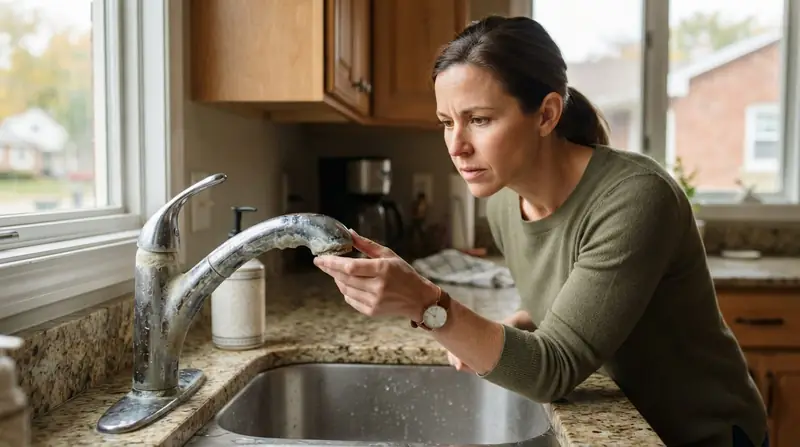
When a drop of water dries, the water leaves but the minerals stay. That is the white ring on a glass and the haze on shower doors.
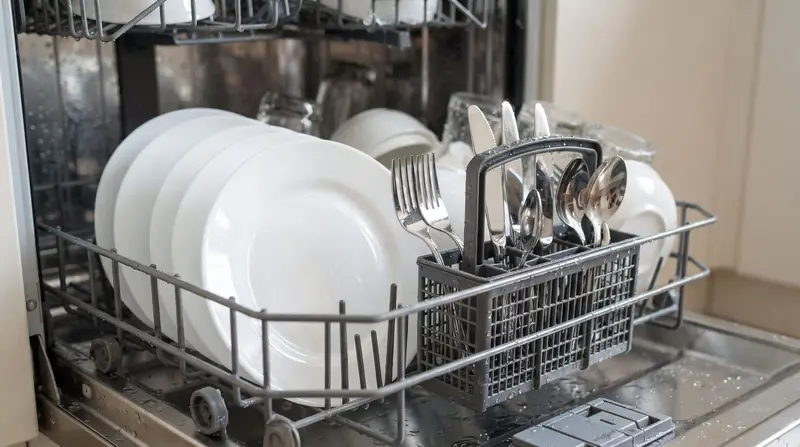
Heat drives calcium carbonate out of solution. Water heaters, kettles, coffee makers and dishwashers collect it fastest, and the layer insulates heating elements.
Calcium and magnesium react with soap to form scum, so it takes more soap or detergent to get a lather and rinse clean.
If white crust fizzes or softens in white vinegar after half an hour, it is almost certainly calcium carbonate scale. Rust-colored deposits that do not dissolve point to iron, covered in the iron filter guide.
If the result is low and the spots do not bother you, a squeegee for the shower and rinse aid in the dishwasher may be all you need. If it lands in the hard range and you see scale in the water heater or on every fixture, a softener is worth a closer look; the decision guide walks through costs and trade-offs. If you already own a softener and still see crust, the troubleshooting guide is the place to start.
Calcium and magnesium are not considered health hazards in drinking water. Hardness is a comfort and maintenance issue.
Boiling drives some calcium out as scale, which is why kettles crust up, but it does not soften the water coming from your taps.
Sources: Green Bay Water Utility 2025 and 2024 Annual Drinking Water Reports; Penn State Extension, “Water Softening” (2025); Minnesota Department of Health, “Home Water Softening” (2022).
What changes at the sink, in the shower and in the laundry.
A step-by-step check before you call.
A decision guide for homes on the city supply.
A worksheet you fill in with your own test result.
Green Bay, Wisconsin
Our map shows 118 S Adams St, Green Bay, WI 54301. Please contact us before visiting if you have questions about getting here or want to discuss your water.
Contact us
Tell us what you are seeing and how to reach you. You can also call 920-678-7116 if you would rather talk by phone.